Why Leaders Should Stop Fixing Problems (and Start Fixing Systems)
October 29, 2025
Every morning meeting sounded the same. The same problems, the same "root-causes", the same actions. That's when we realized we weren't fixing problems, we were managing symptoms.
A pump fails, so we replace it. A shipment's late, so we expedite it. A customer complains, so we hold a meeting.
The leaders felt productive, but the organization wasn't getting healthier. Because the system that creates the problems was still untouched.
The Firefighter Trap
Most leaders are trained to be problem-solvers. They're rewarded for quick responses, heroic recoveries, and long nights. But in an organization that embraces Manufacturing Simplicity, firefighting is a warning sign, not a badge of honor.
If you're solving the same issues over and over, you're not improving. You're trapped in a cycle where "fixes" keep you busy but never free you.
Firefighting hides systemic flaws, like unclear standards, unstable processes, poor flow, and weak communication. Until those systems change, the same fires will keep reigniting.
Problems Live in Systems, Not in People
It's easy to blame the operator, the planner, or the supplier. But 94% of problems come from the system, not individuals. Deming was right.
A system is the combination of processes, policies, tools, and expectations that shape behavior. If people keep making the same mistake, it's not because they're careless, it's because the system allows or even encourages it.
Leaders should ask:
"What about our system made this error possible?" That's where true improvement begins.
System Fixers vs. Problem Fixers
Let's contrast two types of leaders:
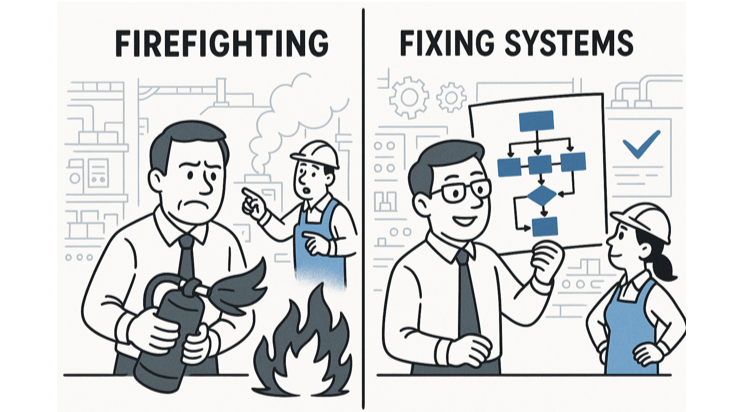
- Problem Fixer: Rushes in to solve the immediate issue. Feels accomplished. Next week, the same problem returns.
- System Fixer: Steps back and asks, "Why does this keep happening?" Adjusts the process, training, layout, or responsibility so the problem can't happen again.
- Track recurrence, not only response time. Measure how often issues stay solved.
- Map causes, not blame. Use visual tools like fishbone and 5 Whys and go past the people level.
- Standardize success. When something works, make it the new standard immediately.
- Create a "stop and fix" culture. Reward teams for identifying root causes, not for heroics.
- Reflect weekly. Ask your leaders: "What recurring issue did we finally eliminate this week?"
The difference is leverage. System thinkers multiply their impact; problem solvers repeat their effort.
How to Shift from Firefighting to System Thinking
You'll be surprised how fast the noise drops when systems start working for you, not against you.
Closing Thought
Fixing problems feels good. Fixing systems feels slow at first. But systems don't get tired. They don't forget. They don't call in sick.
Every improvement you embed in a system pays you back forever.
So the next time a problem reappears, resist the urge to jump in. Step back, look at the system, and ask,
"What's allowing this to happen?"
That's how leaders move from managing chaos to creating flow.
#ManufacturingSimplicity #LeanLeadership #SystemThinking #ContinuousImprovement #OperationalExcellence #Leadership #ProblemSolving #Lean