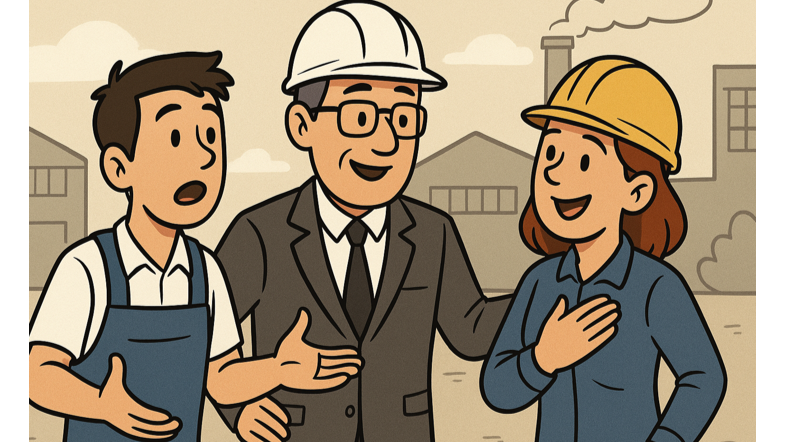
The Most Underestimated Principle in Lean
October 30, 2025
A few years back, I toured a factory where the manager proudly said,
"We treat people with respect here. That's why we have pizza parties every month."
The floor was spotless, the equipment was new, but the atmosphere was heavy. When I asked operators what improvements they'd made lately, one replied,
"We usually just do what we're told. They don't want us changing things."
That's when it hit me again: Respect for people comes from empowerment. Being nice is not enough.
The Real Meaning of Respect
"Respect for People" is often misunderstood as kindness or politeness. Of course, those things matter, but real respect goes much deeper.
Respect means giving people the tools, information, and authority to make things better. I am not talking about avoiding conflict, but engaging every mind to solve real problems.
When leaders make decisions far from where value is created, they send a message, even if unintentional, that experience at the frontline doesn't matter.
Respect restores that balance. It says: You see things I can't. Help me make this better.
In Lean thinking, the absence of respect directly leads to what many call the eighth kind of waste: the waste of human potential. It's also known as underutilized talent, unused creativity, or disengaged employees.
When people aren't trusted to improve their work or their ideas go unheard, organizations lose far more than efficiency. They lose the energy, insight, and innovation that drive progress. Respect for people is the antidote to that waste. It ensures that every person's experience and creativity become part of the continuous improvement engine.
How Leaders Show Respect
- Listen actively: not just to confirm your view, but to understand theirs.
- Remove obstacles: make it easier for people to succeed.
- Develop people: treat every problem as a learning opportunity.
- Delegate improvement, not just tasks: give ownership of ideas, not just execution.
- Be visible: walk the floor, ask questions, and follow up.
Respect isn't words on a wall; it's behavior in action.
Empowerment Drives Engagement
When people see their ideas being heard and implemented, energy spreads fast. Small wins build confidence. Confidence builds ownership. And ownership builds culture.
This is how continuous improvement sustains itself, not by forcing it, but by nurturing it.
One of the most powerful phrases a leader can say is:
"What do you think we should do?"
That's respect in its purest form.
Respect Is Performance
Respect isn't soft, it's strategic. A team that feels trusted will outperform a team that feels managed.
In a Manufacturing Simplicity environment, results come from people who are engaged, learning, and improving together. That's why Toyota calls it one of its two core pillars: Continuous Improvement and Respect for People. They're inseparable. Improvement without respect burns people out; respect without improvement breeds comfort.
Closing Thought
If your people have to ask permission to fix what's broken, that's not respect, that's bureaucracy.
The true test of leadership is how many people around you feel safe, trusted, and proud to improve their work every day.
So here's the question: How do you show respect for people in your organization every day, not just in words, but in actions?
#ManufacturingSimplicity #LeanLeadership #RespectForPeople #ContinuousImprovement #LeanCulture #OperationalExcellence #Leadership