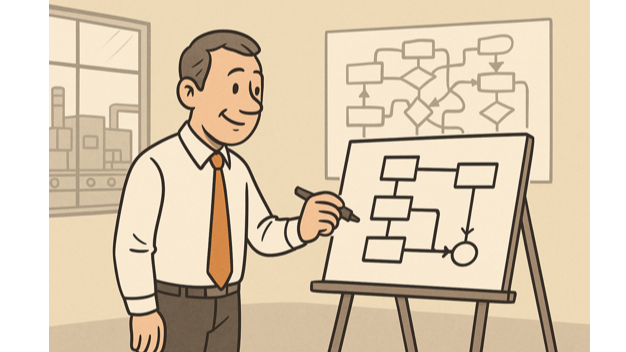
Leaders as Architects --> Designing Systems That Think
November 10, 2025
Once, I visited a manufacturing facility that ran on what I call "leader heroics." Whenever something went wrong, the same few managers rushed in to fix it. They worked hard, they cared deeply, and they were exhausted. Does this sound familiar?
The real problem wasn't a lack of effort. It was a lack of design. The systems they managed depended on people to think for them.
When those people weren't around, everything stalled.
It is way too common that businesses depend on the same handful of people to fix everything. Is this true where you work as well? When issues arise, who are the first people that come to mind to fix them?
Leadership by Design
Most leaders see their job as solving problems and making decisions. Architect leaders think differently. They design systems that solve problems and make decisions.
Instead of being the smartest person in the room, they build a room that makes everyone smarter.
They design meetings that surface issues early, boards that make flow visible, and routines that ensure feedback turns into learning. They don't manage every outcome. They manage the conditions for good outcomes to happen naturally.
That's leadership by design.
Systems that Think
A good operational system is like an immune system: it detects problems early and corrects them automatically.
That's the essence of building intelligence into the process. A self-correcting system doesn't need heroics; it needs structure.
When processes have clear standards, simple signals, with well-trained and empowered people, they start thinking for themselves. That's when improvement becomes organic. Not an event, but a rhythm.
How to Build Thinking Systems
- Make performance visible. If you can't see the problem, you can't fix it.
- Shorten feedback loops. The faster you learn, the faster you improve.
- Empower the front line. The best problem-solvers are closest to the work.
- Design for flow, not control. Systems that depend on approvals and firefighting aren't Lean, they're fragile.
- Standardize learning. When you find a better way, lock it in, teach it, and move on.
These steps turn improvement from a leadership effort into an organizational habit.
The Shift from Operator to Architect
Early in my career, I thought great leaders were those who stayed late and "got things done." Now I see that the best leaders don't do more. They design better.
They invest their energy in building systems that outlast them. They measure success not by how busy they are, but by how little the system depends on them.
Closing Thought
Leaders who fix problems create temporary relief. Leaders who design systems create lasting capability.
So, next time you find yourself solving the same issue for the fifth time, stop and ask:
"What would an architect do?"
Then step back and start designing a system that thinks.
#ManufacturingSimplicity #LeanLeadership #SystemThinking #ContinuousImprovement #OperationalExcellence #Leadership #Jidoka #Lean