The Power of Seeing
November 12, 2025
Why Leaders Must Go to the Gemba
I was once asked to observe a problem-solving meeting that had gone in circles for weeks. Charts, reports, and PowerPoints covered the walls. Everyone had an opinion, but no one had the answer.
Then one quiet technician finally said,
"Why don't we just go look?"
The group walked to the line, thirty meters away, and within five minutes, the issue was obvious. No data crunching, no debate, no guesswork. Just observation.
That's when I was reminded of a truth every great leader eventually learns: You can't improve what you don't see.
What "Gemba" Really Means
In Lean thinking, Gemba means "the real place", or where "things happen" or where "value is created." For manufacturers, that's the shop floor. For hospitals, it's the patient's room. For software, it's where users interact with the product.
Too often, leaders lead from conference rooms and dashboards instead of reality. But spreadsheets can't show frustration, waiting, motion, or pride. Only people can.
Going to the Gemba isn't about inspection. It's about learning.
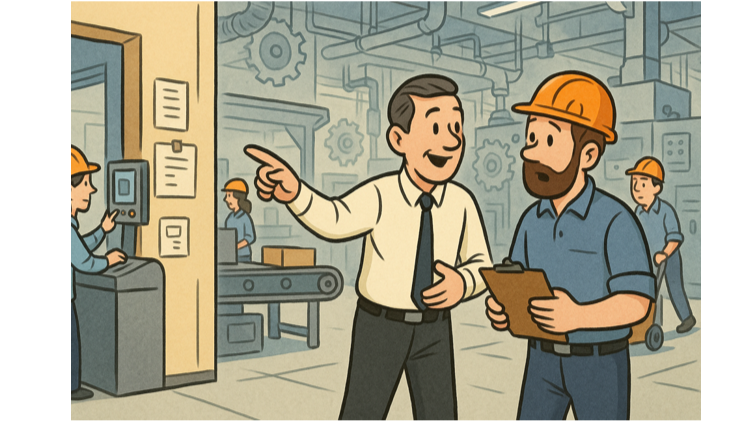
Walking with Curiosity, Not Authority
A real Gemba walk isn't a parade of management clipboards. It's a conversation.
The goal is to understand how the process works and how it can be improved. Please don't start your gemba walks by auditing and looking for mistakes.
When leaders walk with humility and curiosity, amazing things happen:
- Employees open up.
- Problems surface naturally.
- Trust grows.
The best question a leader can ask on a Gemba walk is simple:
"Can you show me how your process works and what makes it hard?"
That one question can reveal more truth than a hundred reports.
Seeing the Invisible
When you go to the Gemba, you see the small things that data misses:
- A machine operator waiting for materials.
- A technician improvising a fix that should've been standardized.
- A process that stops flowing every time a supervisor isn't around.
- Informal inventory buffers to make up for process issues.
These observations are gold, not because they point out faults, but because they expose friction. And friction is the enemy of flow.
Every Lean transformation starts with learning to see. Not through metrics, but through the eyes of the people who do the work.
How to Build the Habit of Seeing
- Go regularly. Make it part of your calendar, not an event.
- Listen more than you speak. The value is in what others tell you.
- Ask "why" five times. But with respect, not interrogation.
- Take notes, not orders. Collect insights, then act on patterns.
- Show gratitude. Thank people for sharing their reality even when it's uncomfortable.
When leaders make seeing a habit, learning becomes continuous and improvement becomes natural.
Closing Thought
You can manage from a distance, but you can only improve up close. The best decisions are made by leaders who go and see, ask why, and show respect.
Next time you're buried in reports, stop for a moment and ask yourself:
"Have I actually seen this problem?"
Then go to the Gemba. The truth, and the opportunity, are waiting there.
#ManufacturingSimplicity #LeanLeadership #Gemba #ContinuousImprovement #OperationalExcellence #Leadership #LeanThinking #Lean