Simplify First, Automate Later
November 14, 2025
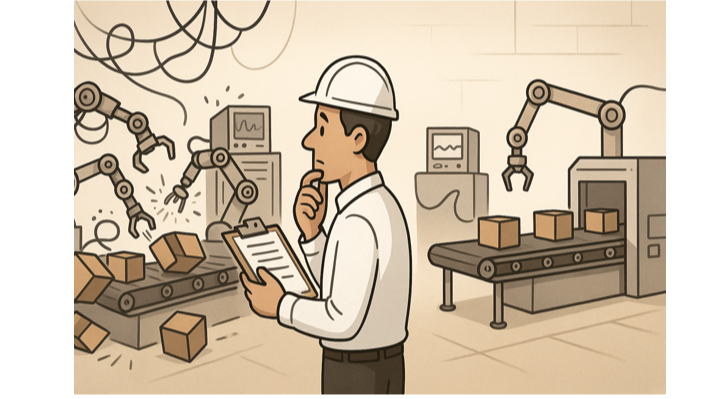
Early in my career, I worked in Germany for a company that had just spent millions on a new automated manufacturing line. It was a "beautiful" piece of equipment full of sensors, conveyors, screens, the works. But quickly, they noticed production was slower than before.
When I asked what had happened, the maintenance manager sighed and said,
"We automated the mess we already had."
That line has stayed with me ever since.
Technology doesn't fix chaos. It just moves it faster.
Why Automation Isn't the First Step
Digital transformation is everywhere, from AI, robotics, dashboards, and IoT. But without simplifying first, automation just becomes a faster way to make the same mistakes.
A process full of waste will stay full of waste, no matter how modern the machinery looks. Before you invest in automation, ask yourself: Is the process simple, stable, and standardized?
If not, automation will only magnify the inefficiencies you already have.
Simplify Before You Digitize
In Lean, simplicity is not aesthetic; it's strategic. Simplifying before automating means:
- Removing redundant steps.
- Ensuring consistency, or "robustness".
- Clarifying responsibilities.
- Standardizing materials, layouts, and methods.
- Making abnormalities visible.
When you do this first, automation becomes cheaper, smoother, and more reliable. Because now, you're automating clarity, not confusion.
Technology Should Serve People, Not Simply Replace Them
The best companies don't automate to cut people, they automate to free people. Free them from repetitive, low-value work so they can focus on solving problems, improving flow, and innovating.
When people understand the process deeply, they can design automation that adds real value instead of complexity.
Automation should enhance human creativity, not bury it under code and cables.
A Simple Test Before You Automate
Before approving an automation project, ask your team five questions:
- Can we clearly describe the current process from start to finish?
- Have we eliminated all obvious waste (waiting, overprocessing, rework)?
- Is there a stable standard everyone follows today?
- Do we measure the right things, such as flow, quality, and uptime?
- Will automation make this process simpler to understand, not harder?
If you can't answer "yes" to all five, go back to the Gemba and simplify first.
Closing Thought
Automation is exciting, but it's not a transformation. Transformation begins when people understand their process so well that automation becomes the natural next step, not a desperate shortcut.
So before you connect machines, connect minds. Because Lean before digital isn't old-fashioned. It's the only way automation truly works!
#ManufacturingSimplicity #LeanLeadership #Automation #Simplification #ContinuousImprovement #DigitalTransformation #OperationalExcellence #Lean