From Compliance to Commitment
November 16, 2025
Turning Procedures into Culture
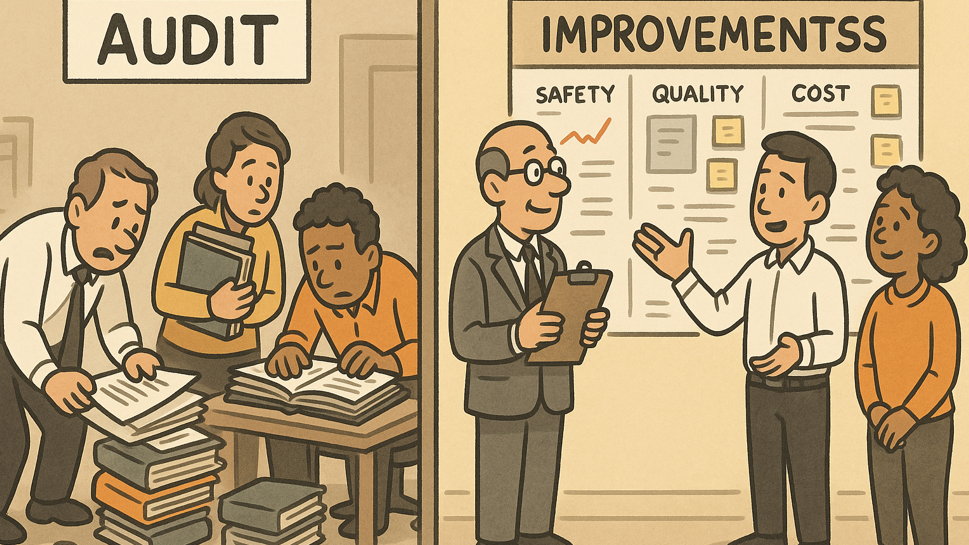
You are probably familiar with this situation: imagine a business just days before a major ISO audit. The energy is frantic. Everyone is cleaning, updating binders, and rehearsing answers. The place looks perfect, at least for that week.
After the auditors leave, or maybe two weeks later, you realize that the binders are back on the shelf, and the improvement boards are empty again.
That's when you realized: they don't have a quality system, they have an audit survival strategy.
Compliance Keeps You Safe. Commitment Makes You Excellent.
Compliance is about meeting the minimum, doing what's required to stay certified, legal, or out of trouble. Commitment is about doing what's right, even when no one is watching.
A compliant organization follows procedures. A committed one improves them.
The difference is in the culture, not in the documentation.
The Problem with "Procedure Thinking"
Most companies build their quality systems around control. They write procedures to prevent mistakes, but end up creating distance between the people doing the work and the people writing the rules.
The result: people follow instructions without understanding why, and improvement becomes paperwork instead of progress.
Procedures should capture the best-known way, not freeze it. When a process changes, the document should change because of the people who improved it, not in spite of them.
That's how you turn compliance into learning.
Culture Eats Audits for Breakfast
You can't "audit in" a quality culture. You build it by engaging everyone, from operators to managers, in improving their own processes.
Here's what that looks like in practice:
- Operators take ownership of their work standards.
- Supervisors coach instead of police.
- Audits become learning events, not stress tests.
- Problems are surfaced, not hidden.
When that happens, you don't prepare for audits anymore; instead, you live them.
How to Build Commitment Instead of Compliance
- Explain the "why." People protect what they understand.
- Empower ownership. Let the process owners maintain their documents and improvements.
- Recognize improvements, not just adherence. Reward learning.
- Integrate audits into daily routines. Make compliance the side effect of doing things right.
- Lead by example. If leaders don't follow the standards, no one else will.
Commitment is contagious. It spreads through actions, not memos.
Closing Thought
A system designed to pass audits will always chase the next checklist. A system built on commitment will always chase excellence.
When people feel ownership of their process, documentation becomes evidence of pride, not paperwork for survival.
So the question isn't "Are we compliant?" It's "Are we committed?"
#ManufacturingSimplicity #LeanLeadership #QualityCulture #ContinuousImprovement #OperationalExcellence #Leadership #ISO #Lean