Simplicity is a Leadership Strategy
October 21, 2025
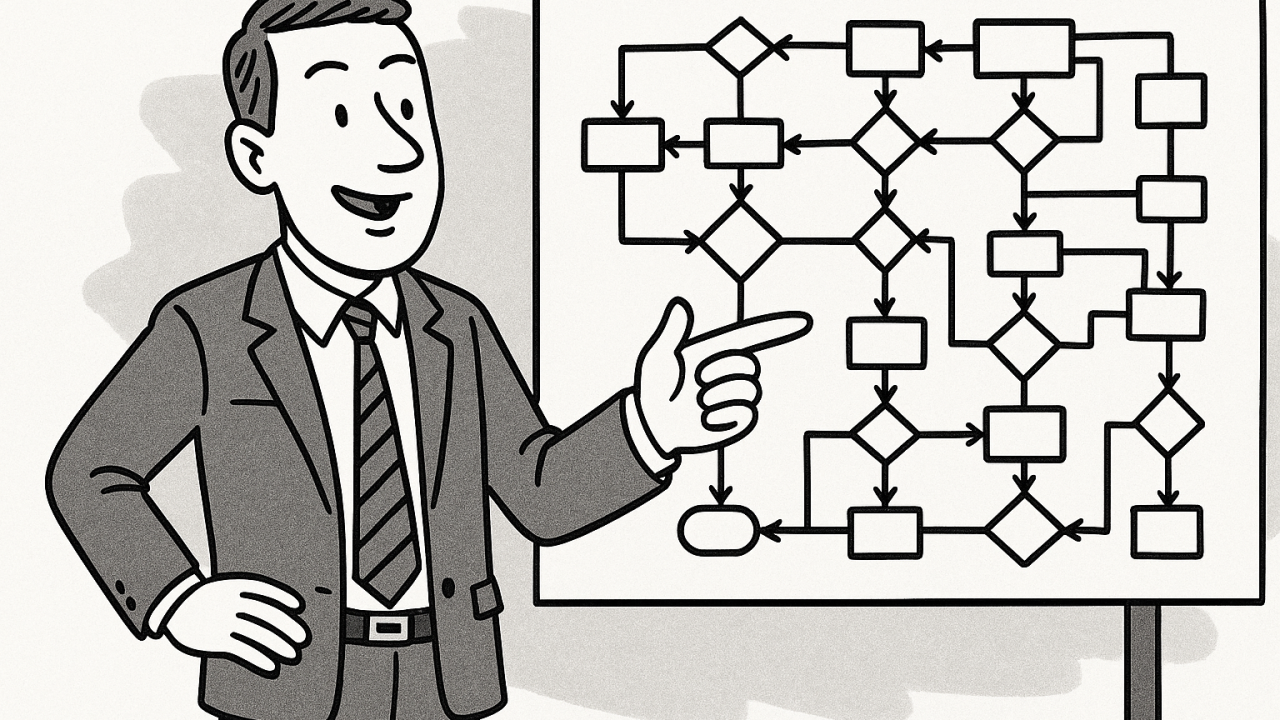
A few years ago, I walked into a factory that had a problem everyone swore was "impossible" to fix. We see the same thing in every business we are asked to help improve. Production delays, low morale, constant firefighting... the usual suspects. At this specific location, I asked to see the process map, and they handed me a flowchart that looked more like a subway map than a manufacturing system.
Just about every step had an exception, every exception had an approval, and every approval had a spreadsheet. No wonder the team was exhausted.
So we gathered a small group and asked one question: "What would happen if we removed half of this?"
After a long pause, one engineer said quietly, "Probably… nothing bad."
That's when it hit them, us, again: complexity isn't a sign of sophistication. It's usually a symptom of fear, lack of clarity, or trying to fix problems by adding more rules instead of removing friction.
Complexity Grows Naturally, But Rarely Adds Value
As companies expand, they accumulate policies, procedures, and systems like barnacles on a ship. Each new initiative feels reasonable on its own, but together they create drag.
Here's the catch: most of that drag is invisible. Leaders see costs rise and agility fall, but they often blame the wrong things. Usually they blame people, tools, or suppliers, when the real culprit is self-inflicted complexity.
In Lean terms, complexity hides waste. It makes problems harder to see, slows decisions, and creates silos where clarity used to exist.
The Simplicity Advantage
Simplicity focuses energy where it actually matters.
When leaders remove unnecessary steps, something powerful happens:
- Communication speeds up.
- People take ownership.
- Problems surface earlier.
- The organization starts learning faster than competitors.
Simplicity turns chaos into flow. And flow is where performance lives.
Leading Through Subtraction
Simplicity is a leadership decision. It means saying no more often, merging redundant systems, and trusting people to make decisions without layers of control.
Great leaders don't add complexity to show control. They remove it to show confidence.
If you're a leader, try this: In your next meeting, ask your team,
"If we had to cut 30% of our processes steps, which ones would make us faster and better, not weaker?"
The answers might surprise you.
Complexity can make leaders feel busy. Simplicity makes organizations effective.
If you want a competitive advantage that lasts, start leading through simplicity and not through control.
So let me ask you: What's the most unnecessarily complex process in your organization today?
#ManufacturingSimplicity #Leadership #LeanThinking #ContinuousImprovement #OperationalExcellence #SimplicityWins #Lean